
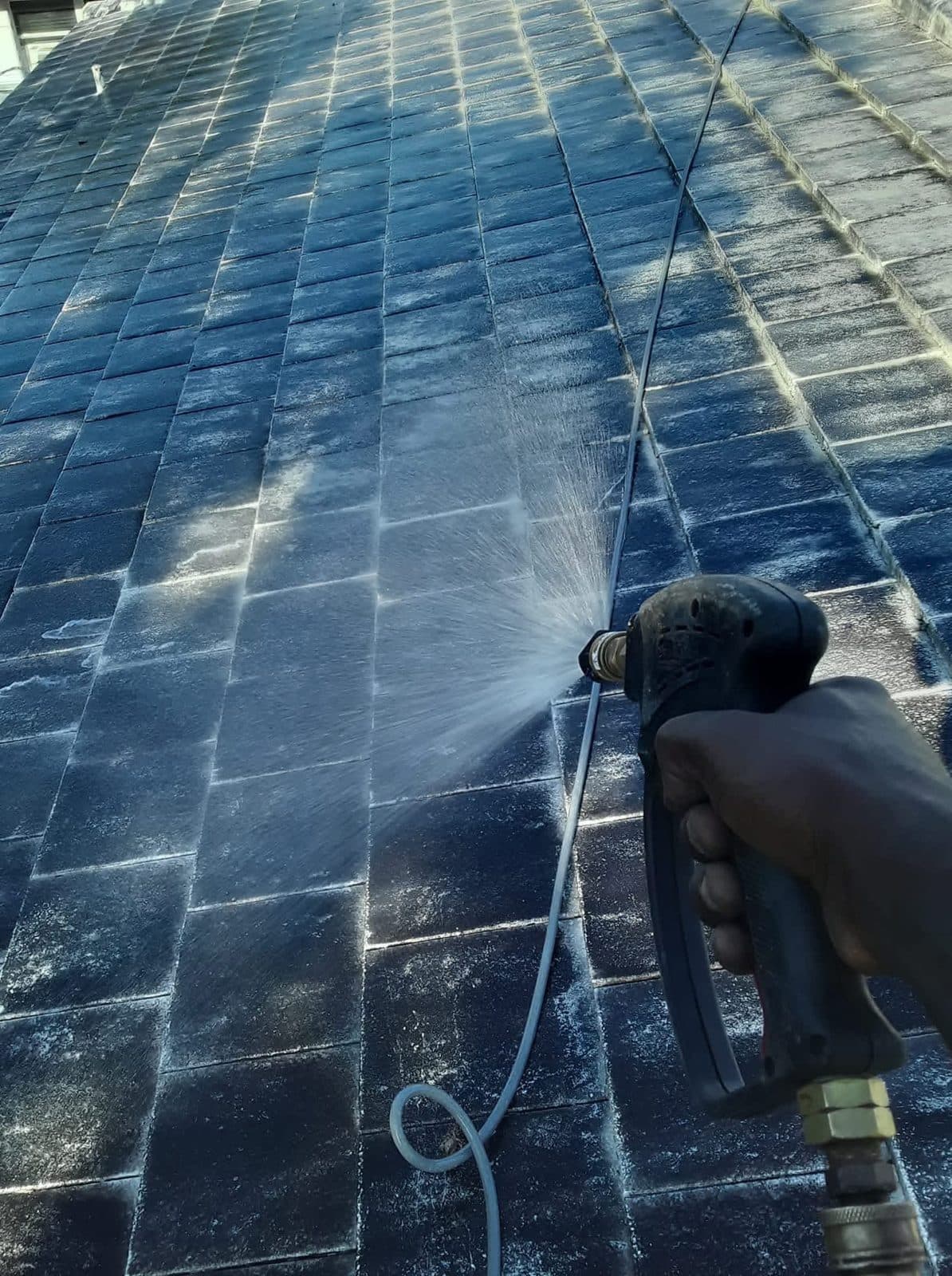
Why Miami roofs go black
Gloeocapsa magma is airborne, and it lands on every roof in South Florida. It feeds on the limestone filler in shingle and the surface of concrete tile, it wants humidity and it wants shade, and Miami gives it both from May through October. The north slope and the slope under a tree go first, and once a colony is established it spreads with every rain. It also holds heat, which is why a black shingle roof runs hotter than a clean one. Killing it, not scrubbing it, is the only thing that keeps it from coming straight back.